After COP31 failures, the world must double down on cooperation to protect health, says ICN

The International Council of Nurses (ICN) is calling on governments to recommit to urgent shared action on climate and health after the 31st UN Climate Change Conference (COP31) in Antalya, Türkiye, ended without an agreed outcome. Ahead of COP31, the World Health Professions Alliance (WHPA), chaired by ICN CEO Howard Catton, had urged governments to put health and the health workforce at the heart of climate action.
Countries could not agree a cover decision as COP31 closed on Sunday 22 November, two days late. Disagreements centred on commitments around transitioning away from fossil fuels and the scale of finance for adaptation. It is the first time in over twenty years that a COP has ended with no high-level decision at all.
ICN President Dr José Luis Cobos Serrano said:
"The climate crisis is a health crisis, and the failure to agree a way forward at COP31 has let down the health of people everywhere. ICN is deeply concerned that even before talks broke down, health had been pushed to the margins of the draft text, with no mention of the right to health or the health workforce, and that there was no consensus on naming the fossil fuels that are a major cause of climate change, driving natural disasters and making people sick.
‘The global health community has described this COP as having 'betrayed people's health'. For the patients and communities living with deadly heat, floods and polluted air, and the nurses caring for them, that is exactly how it feels. Nurses see and treat these health harms first-hand every day, and their voice and experience must shape a more ambitious and equitable climate response.
"We did see signs of health moving closer to the centre of the climate agenda, from the conference opening with Health Day to resilient health systems being named one of the ten priorities of the COP31 Action Agenda. But recognition is not enough. ICN calls on leaders to urgently commit to bold shared action, backed by funding and firm timelines, to truly protect people’s health and strengthen the workforce that safeguards it.”
The evidence of the toll of climate change on health keeps growing. WHO's climate and health briefing for COP31 described how between 3.3 and 3.6 billion people live in places highly vulnerable to climate change, while The Lancet Countdown on health and climate change 2026 reported that heat was linked to a record 710,000 deaths in 2023, more than malaria or HIV. These impacts deepen inequalities and the heaviest burden often falls on regions and communities that have done least to cause the crisis, meaning equity must be at the core of the response. Nurses are on the frontlines at every stage: they care for patients through heatwaves, floods and disease outbreaks, sometimes working through adverse weather conditions themselves while caring for growing numbers of patients in health systems already under pressure.
ICN Chief Executive Officer Howard Catton said:
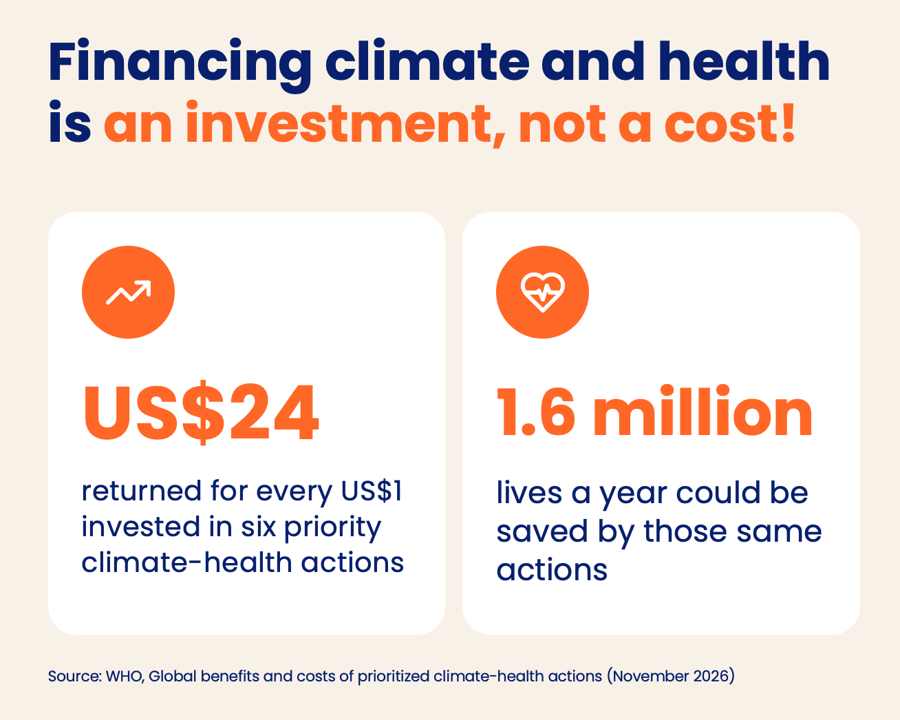
"In the face of these stalled decisions, we need leaders to recognize that climate and health action is not a cost, it is an investment. WHO estimates that every US$1 invested in priority climate and health actions returns US$24 in benefits. Investing in the nursing workforce is central to that: nurses are the ones who turn climate and health plans into care on the ground. When global cooperation falters, the consequences are felt throughout hospitals, clinics and communities. This is the moment to double down on multilateralism, but we must also recognise the need for a different approach to international cooperation – one that builds consensus and enables collective action without allowing the absence of unanimity to stand in the way of progress. The urgency of the climate and health crisis demands nothing less than a fully funded response that leaves no one behind.
‘As the largest and most trusted health profession, nurses are a foundational part of that response. We are uniquely placed to lead climate and health action, from preparing communities for extreme weather and treating heatstroke, respiratory illness and other climate-sensitive conditions to advocating for cleaner air and safer health facilities. There can be no climate resilience without health workforce resilience, and investing in the education, protection and leadership of nurses is one of the surest ways to keep populations safe.”
ICN and the nursing voice at COP31
ICN's Senior Policy Advisor Erica Burton followed COP31 virtually, tracking key health discussions and negotiations throughout the conference. Many sessions stressed the vital role of health workers in climate action, while warning that plans are not yet reaching the frontline and that health workers themselves are feeling the impact of extreme weather.
Ms Burton said:
"Listening to the discussions at COP31, it is very clear that we can no longer ignore the impact the climate crisis is having on our health and wellbeing. This is not a tomorrow problem. This global health emergency is happening now. Nurses are on the ground seeing, feeling and responding to it every day, and we can help translate policies and strategies into frontline action, and frontline action into policies and strategies. We need every nurse to recognize their power to be an advocate for climate action, not only in policy, research or education, but in practice with patients and communities."
Nurse leaders on the ground in Antalya
Nurses from all around the world were in Antalya, representing universities, health systems, nursing societies and civil society groups, many through the Alliance of Nurses for Healthy Environments (ANHE) delegation. Together, they made the case that the nursing voice belongs wherever decisions about health and climate are made.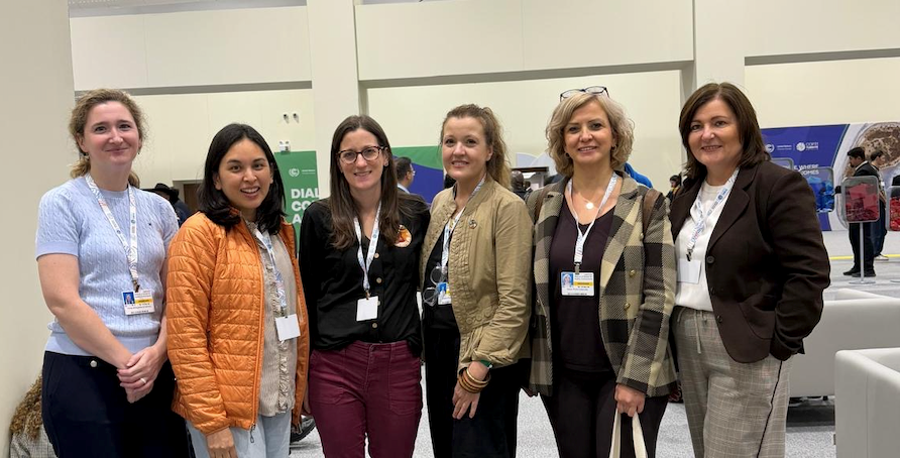
Alliance of Nurses for Healthy Environments delegation on the ground at COP31
Cara Cook, Deputy Director of ANHE, said nurses came to Antalya to call for real investment in climate-resilient health systems. She remarked:
"Nurses see the climate crisis every day, in the patient struggling to breathe through wildfire smoke, the person admitted with heat stroke, and the family whose clinic was cut off by floods. Our contribution is a vital perspective often absent from these negotiations: an understanding of the human consequences of each decision made, or not made."
Another nursing leader present, Dr Aysun Perim Ketenciler of Tekirdağ Namık Kemal University, Türkiye, described climate change as a public health challenge that demands strong leadership from nurses at all stages of their career:
"Nurses have a unique responsibility to connect global climate policies with local community action. By integrating climate and health into nursing education, empowering young people and strengthening community resilience, we can transform awareness into action. Our voice must be heard not only in health care settings, but wherever decisions about the future of our planet are made."
Dr Kasey Bellegarde Armstrong, a public health nurse who works with communities and health care institutions on climate resilience at Health Care Without Harm, and an alumna of ICN's Global Nursing Leadership Institute, made a strong economic case for action, saying:
"Climate finance is health finance. A just transition away from fossil fuels is disease prevention. Nurses spend our careers working to prevent avoidable suffering, and we cannot do that if we remain silent about the policies and systems that are making people sick. Climate action is health care in its most fundamental form."
Professor Charlotte McArdle, former Chief Nursing Officer for Northern Ireland and an alumna of ICN's Global Nurse Leaders Programme, highlighted how chief nursing officers can work across government to make health part of every policy: "Nursing is the most trusted profession and has the ability to speak up and advocate for change. Nursing is well placed to lead the policy changes in health care that need to happen, and to move us from action planning to action implementation."
Other nurse leader delegates including Dr Jitana Benton-Lee, Dr LaTressa Gordon, Dr Connie Sobon Sensor, Grace Kistner, Milagros Elia and Dr Linda Koh raised issues from climate justice and health equity to early warning systems and the risks facing children and older people.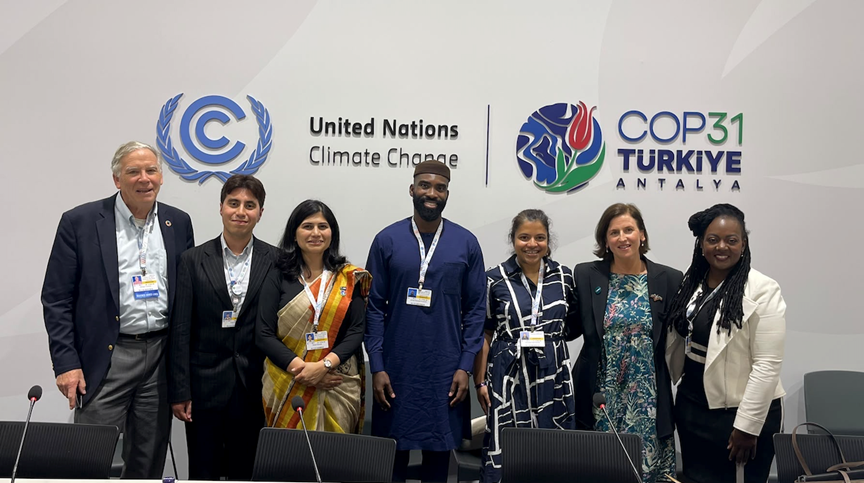
Dr Jitana Benton-Lee and other nursing and health leaders at COP31 side event
As the unresolved negotiations move to COP32 in Addis Ababa, Ethiopia, in November 2027, ICN calls on governments to:
agree a fast, fair and funded transition away from fossil fuels, at COP32 and at the 2027 conference on transitioning away from fossil fuels
put health, the right to health and strong commitments on health workforce planning into national climate plans, not only adaptation plans
implement the Belém Health Action Plan, with nurses involved at every stage
make climate finance reach health systems and the nurses who keep them running
invest in a climate-ready nursing workforce, with education, protection from extreme heat and safe working conditions
make equity a priority in all climate action, protecting the communities and health workers most at risk.