

Austrian national media highlight ICN's calls for stronger community nursing and workforce planning

Media coverage highlights ICN CEO’s visit to Salzburg amplifies need to align nursing workforce investment with health system priorities
National and regional media coverage in Austria has amplified key International Council of Nurses (ICN) messages on the urgent need to strengthen community and primary care nursing, improve workforce planning, and ensure nurses are educated, deployed and empowered in the places where people need them most.
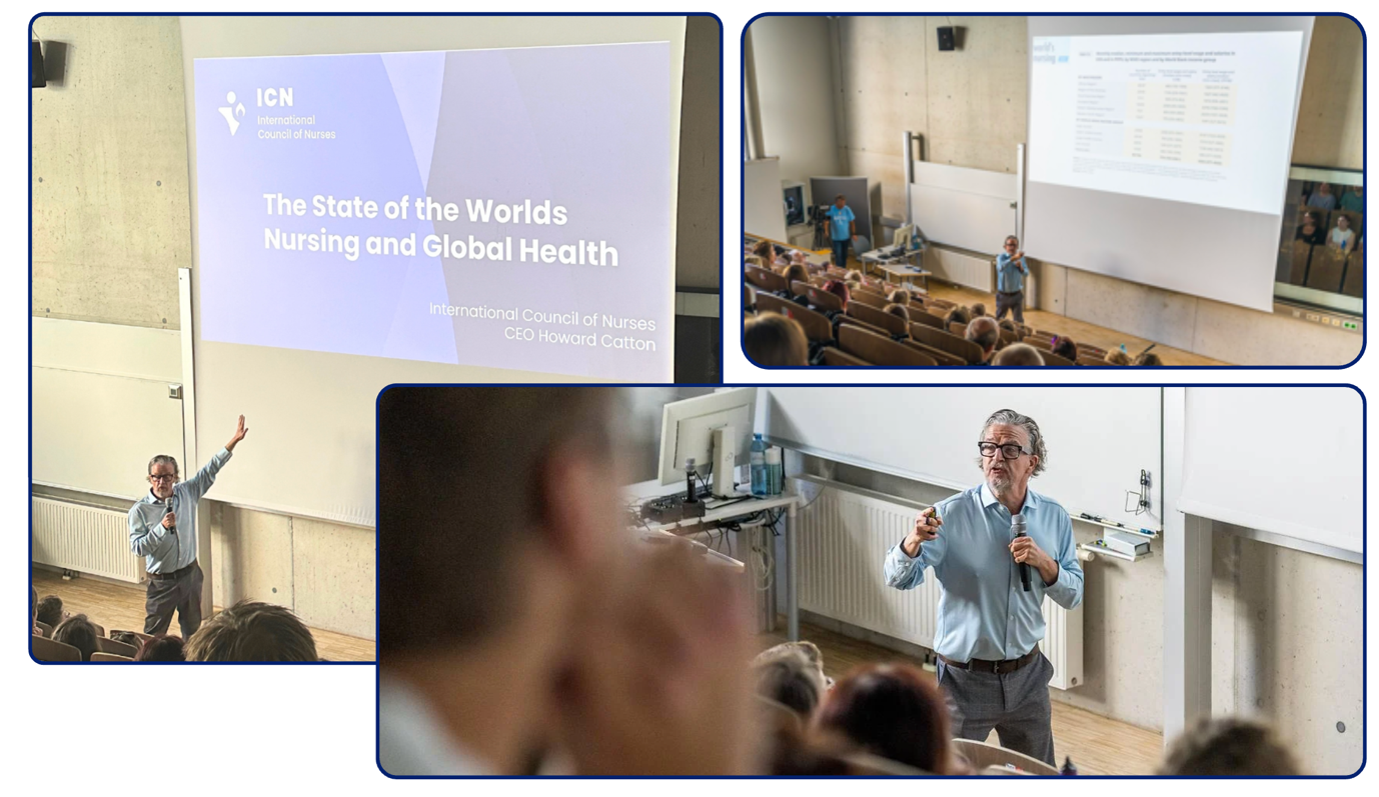
The coverage followed a recent visit by ICN Chief Executive Officer Howard Catton to Salzburg, where he delivered a lecture at the Summer School of Paracelsus Medical University (PMU) to an audience of global health researchers, policy leaders, nursing academics and students. Participants included Jürgen Osterbrink, Head of the Institute for Nursing Science and Practice at PMU, and Salzburg's Nursing Commissioner Karl Schwaiger.
During the lecture, Mr Catton shared evidence and policy recommendations drawn from the World Health Organization (WHO) State of the World's Nursing 2025 report, which ICN co-chaired, as well as the Strategic Directions for Nursing and Midwifery, ICN’s International Nurses Day report, and other global policy and data. His message was clear: health systems cannot deliver Universal Health Coverage, people-centred care or care closer to home unless we deliver on global policy commitments with strong investment in the nursing workforce.
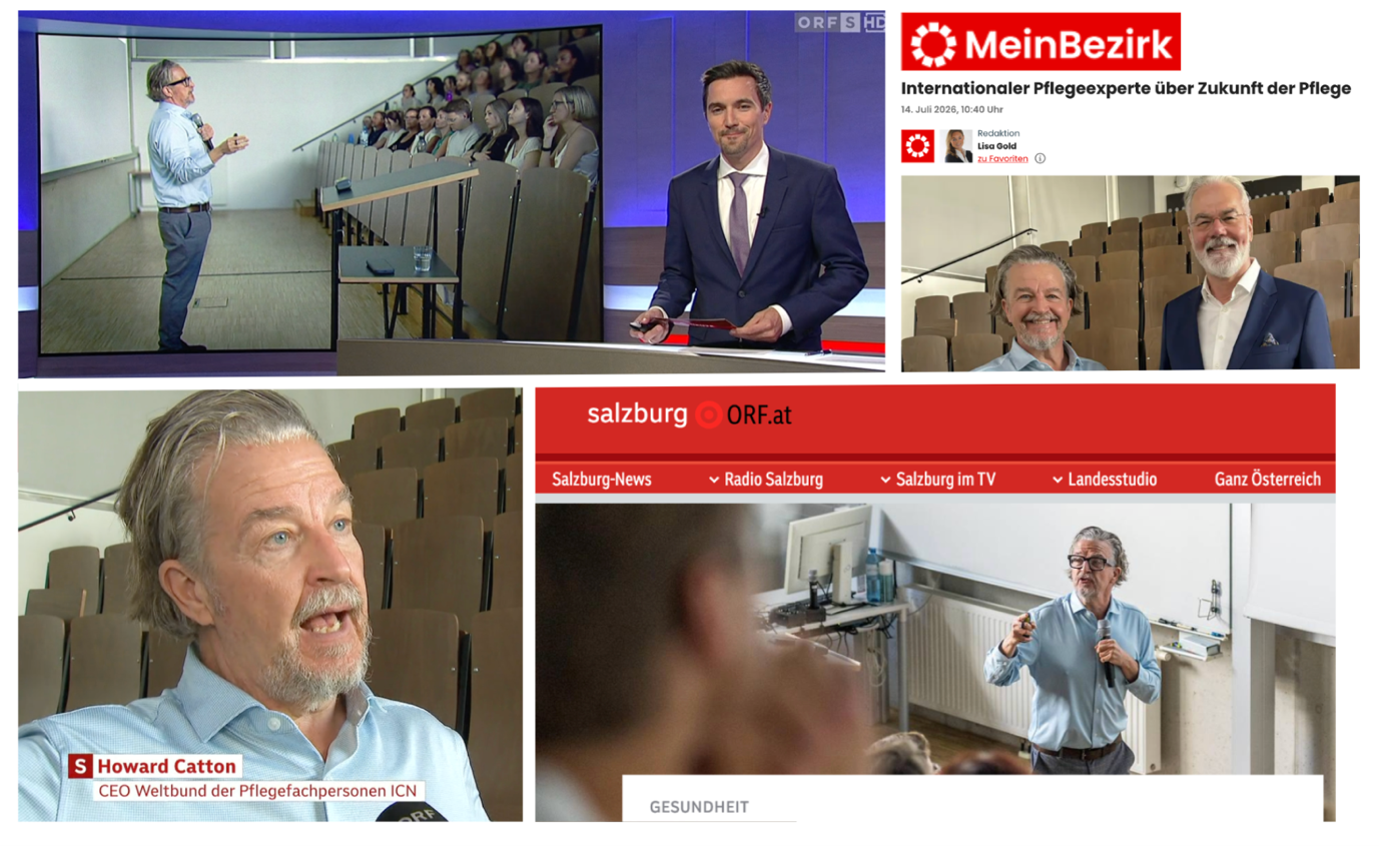
The visit generated significant media attention, including coverage by Austria's national public broadcaster ORF and leading regional news network MeinBezirk.at. Throughout these press engagements, Mr Catton emphasized that to meet evolving population health needs and achieve global health goals, health systems must invest in nursing as the backbone of preventive, primary health care and people-centred care in the community.
Speaking after the visit, Mr Catton warned that health systems must urgently correct a mismatch between global policy commitments and where workforce investment is actually made, saying:
"We not only need to ensure that countries have enough nurses, but that these nurses are in the right places and are well-supported and enabled. Global health policy rightly commits to delivering more prevention, more primary health care, more integrated services and more care delivered closer to home. Yet currently, too often workforce and resource planning still focuses only on hospital settings and medicalized care. That is a fundamental misalignment between what global health policy commits to and where nursing investment is placed. If we are serious about bringing care to all people, then we must plan, educate and invest in nurse-led community and primary health care, including specialist and advanced practice nursing roles.”
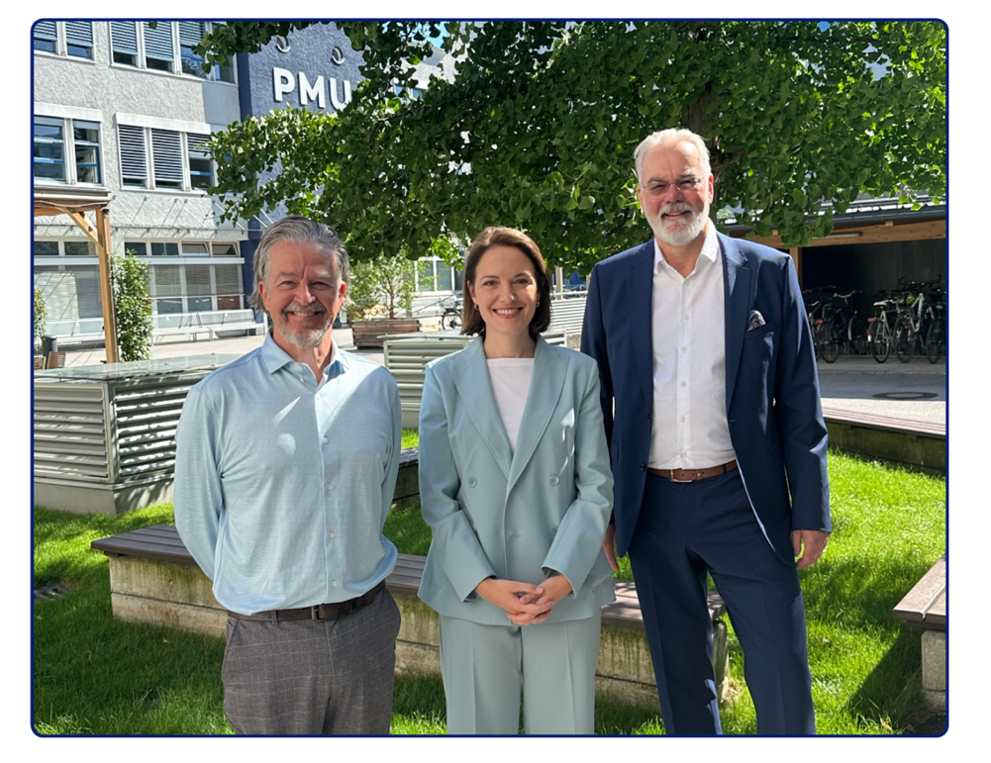
Pictured: ICN CEO with Annemarie Weißenbacher, PMU Rector, and Jürgen Osterbrink, Head of PMU Institute for Nursing Science and Practice
The Salzburg visit provided a practical example of how policy and workforce planning can be brought into better alignment. As reported in ORF, Mr Catton welcomed local efforts to revive and strengthen Community Nursing programmes, describing them as an important step towards building sustainable health systems capable of meeting future needs.
In the ORF news interview, Mr Catton said:
“None of us wants to be in hospital unless it is absolutely necessary. If you create nursing models that also function at home, then you reduce pressure on hospitals. Ultimately, that is a win-win situation for policymakers and the popultions they serve.”
A further focus of Mr Catton’s Salzburg visit was the need to strengthen nurse-led models of care and advanced nursing practice, including ensuring investment in ANP education and enabling nurses to work to full scope of practice who can assess, diagnose, prescribe, coordinate care, manage chronic disease and lead complex services depending on national regulatory frameworks. This also means creating more career pathways so that roles working in community settings are available and accessible to nurses throughout their careers, not just at a single entry point.
Mr Catton met with 30 Masters Advanced Nursing Practice students, underlining ICN’s message that specialist and advanced practice nursing are essential to the future of health systems and the workforce of tomorrow.

Pictured: ICN CEO meeting Masters Advanced Nursing Practice students at Paracelsus Medical University
Mr Catton also highlighted the importance of sustainable workforce planning and cautioned against over-reliance on international recruitment which can further deepen global inequities. This message was picked up prominently by ORF and other outlets.
Through both the lecture and the extensive media coverage that followed, ICN's evidence-based messages reached audiences across Austria, demonstrating the value of combining workforce data, policy analysis and nursing leadership to drive meaningful health system change. ICN’s advocacy made clear that the future of healthcare depends not only on having enough nurses, but on ensuring nurses are educated, deployed and empowered where people need them most, including in communities and primary health care settings.