

ICN urges G7 to protect health workers as nurses stand in solidarity on the shores of Lake Geneva
Today, as the G7 summit closes in Évian, France, the International Council of Nurses (ICN) brings nurses to the lakeshore to demand protection for all health workers, directly across the water from where several of the world’s most influential decision-makers are meeting. Standing together to represent the 30 million nurses worldwide, they come with a clear call to urgently protect nurses and health workers in conflicts, crises and health emergencies.
The lakeside action follows a letter sent to G7 leaders by ICN President Dr José Luis Cobos Serrano, urging them to place the protection and empowerment of nurses and health workers at the very centre of their summit, the latest step in ICN's sustained advocacy for nurses in conflict and crises through #NursesforPeace. Read more about ICN’s latest work to protect nurses, including input to the United Nations, WHO and World Health Assembly, and direct support for nurses in wars and health emergencies.
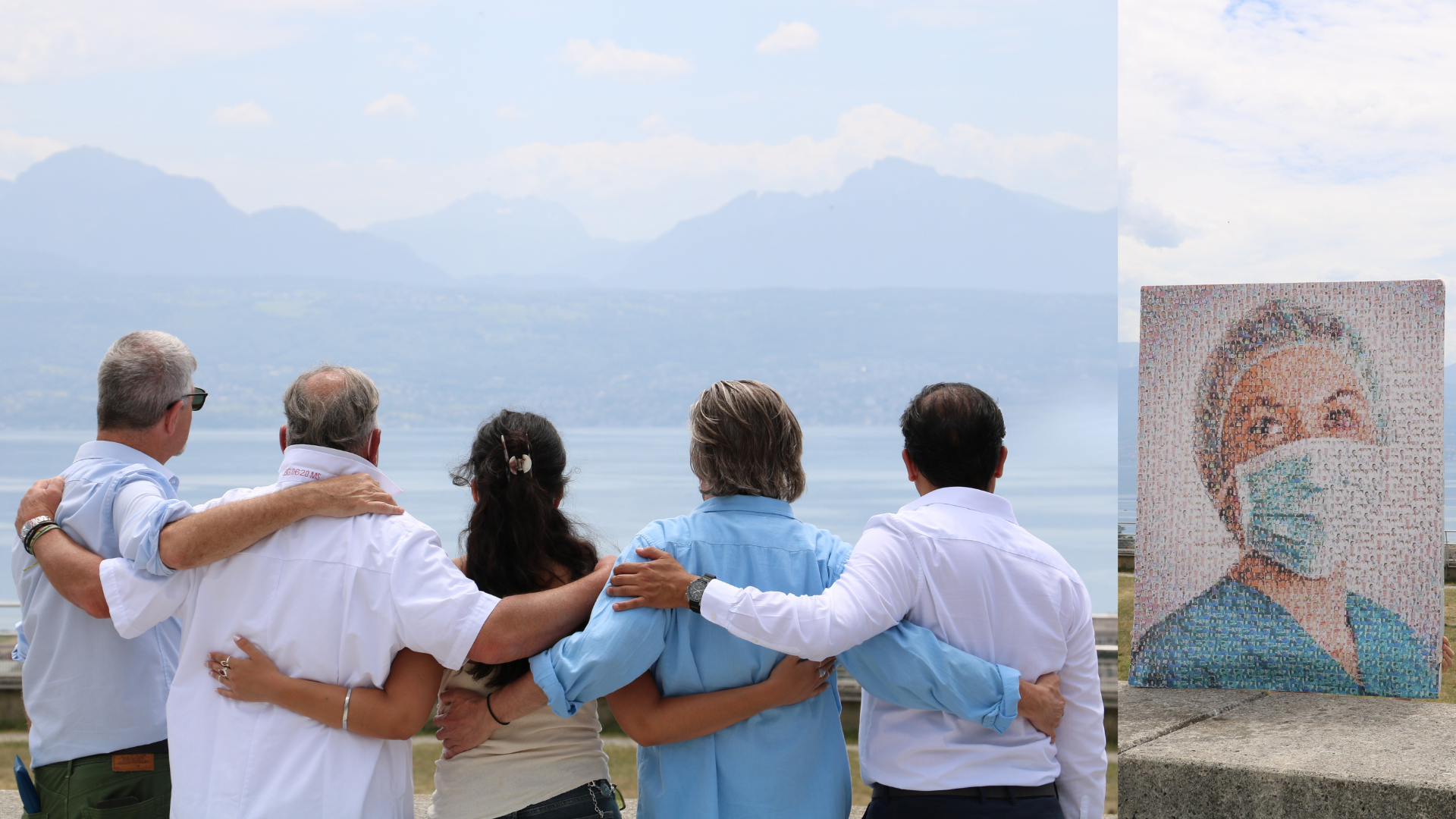
At the heart of today’s gathering is a powerful image: the nurses on the lake shore with the portrait made up of the faces of colleagues who lost their lives to COVID-19, during which at least 115,000 health workers worldwide lost their lives, a stark reminder of the devastating consequences of failing to protect those who care for others.
Speaking at the lakeside gathering, ICN CEO Howard Catton said:
"Every face in the picture held by the nurses gathered here today represents a colleague who tragically died caring for others. We are here not only to remember them and to stand in solidarity with every colleague in health emergencies and conflicts, but to demand urgent protection.
The nurses standing here today are sending a powerful warning to the G7 leaders: without urgent action, this same picture could be filled anew with the faces of nurses being killed, harmed, kidnapped, and detained in today's conflicts, or falling ill from the diseases they put themselves at risk to treat. Nurses are being left unprotected and even deliberately targeted as they uphold their ethical duty to care for all in settings ranging from war zones to health emergencies such as Ebola. That duty of impartial care is enshrined in ICN’s Code of Ethics and protected under International Humanitarian Law (IHL).
Our message to the leaders across the water is simple: act now to protect those who dedicate their lives to protecting others. End the violations of IHL and ensure proper PPE and safety for nurses. We cannot allow this picture to be filled again.”
In his letter to the G7 leaders, ICN President Dr Cobos Serrano amplified this message,
warning that despite repeated international commitments, attacks on health care are rising and accountability is failing. He cited the latest report from the Safeguarding Health in Conflict Coalition (SHCC), of which ICN is a founding member, which documents 2,546 attacks on health care in 2025 alone.
Dr Cobos Serrano described nurses’ power to support peace and healing and highlighted the wider stakes of protecting health care and health workforces. He wrote:
"Whether in conflict settings or responding to epidemics and emergencies, nurses defend human rights and protect the most vulnerable, keep health systems running, and help societies heal, rebuild and recover. We see every day the devastating consequences when nurses are denied the protection, support, protective equipment and safe conditions they so urgently need and deserve, and when attacks on health care continue with impunity and a lack of accountability. Protecting and investing in nurses, the world’s largest health workforce and a majority-women profession, is not only a question of health: it is a humanitarian issue, a gender equity issue, a global security issue, an economic issue, and a moral test of global leadership."
Dr Cobos Serrano called on G7 leaders to end attacks and fully enforce International Humanitarian Law, guarantee safe working conditions and adequate protective equipment for all health workers, and invest in nursing and health workforces as the foundation of global health security.
The G7 summit has drawn wider global health advocacy, with an open letter to leaders of the G7, G20 and BRICS from WHO Director-General Dr Tedros Adhanom Ghebreyesus and President Luiz Inácio Lula da Silva of Brazil urging governments to finalize the Pandemic Agreement's Pathogen Access and Benefit-Sharing annex and echoing ICN’s calls for a strong and just response to future health emergencies — which must include the protection of health workers.