

No pandemic preparedness without workforce: ICN delivers strong statement to the UN as pandemic declaration fails to pass
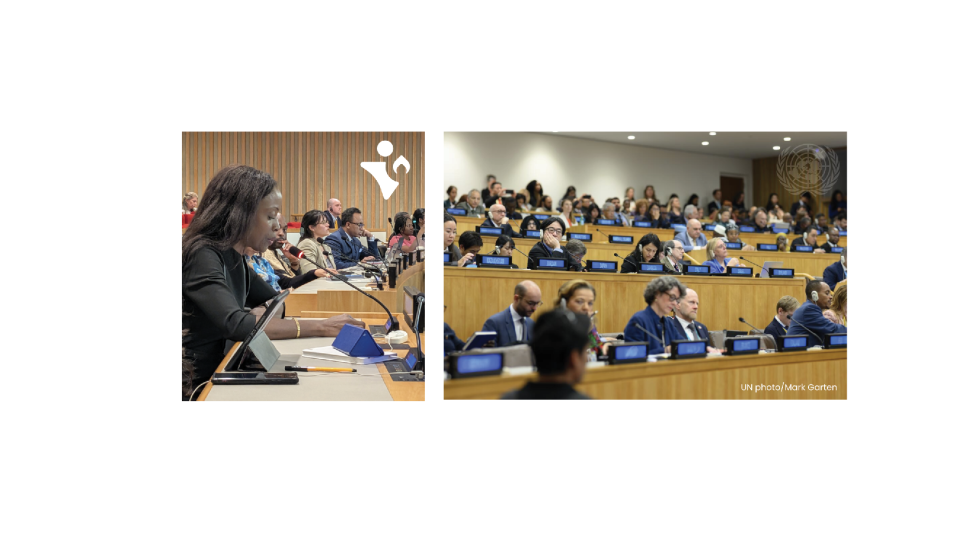
The International Council of Nurses (ICN) has called on world leaders to urgently prioritize just and equitable pandemic preparedness, with health workers at the centre. In a statement delivered at the 25 September UN High-Level Meeting on Pandemic Prevention, Preparedness and Response (PPPR), ICN warned that preparedness must begin with the health workforce—and it must begin before the next crisis.
ICN has also responded to the failure of the UN PPPR High-Level Meeting to adopt its Political Declaration as well as the continued deadlock in negotiations on the Pathogen Access and Benefit-Sharing (PABS) annex to the WHO Pandemic Agreement, without which the Agreement cannot enter into force.
ICN President José Luis Cobos Serrano said:
“As WHO Director-General Dr Tedros rightly said, delays in reaching agreement will cost all countries dearly when the next pandemic arrives. Deferring pandemic preparedness is a risk the world simply cannot afford. We must not forget the painful lessons of COVID-19, when at least 115,000 health and care workers lost their lives because the world was not ready. The current Ebola outbreak in the Democratic Republic of the Congo is a stark reminder that health workers are always the first line of defence, and that they are continuing to be put at risk without the right protections in place.
‘Viruses do not stop at borders and they do not wait for diplomats. Every day without strong global cooperation and agreement is a day the world is less prepared, and it is nurses and health workers who will pay the price first when the next pandemic comes. We urge all governments to finish this vital work: to adopt the Political Declaration; to agree the PABS annex and bring the Pandemic Agreement into operation; and to invest in the health workforce that keeps the world safe.”
ICN brought a strong nursing voice to the UN General Assembly (UNGA), and was represented at the PPPR High-Level meeting by Josephine Agyei, Chair of the ICN Student and Early Career Nurses (SECN) Alliance, and Dr Donna Cill. Delivering ICN’s intervention, Dr Cill warned that "we cannot allow the end of the COVID-19 emergency to become the end of our investment in preparedness". ICN reminded world leaders that health workers are facing growing pressures from workforce shortages, rapidly ageing populations, rising chronic diseases climate change and humanitarian crises. Looking ahead to the appointment of the next UN Secretary-General, ICN urged future UN leadership to recognize health workers as essential to keeping societies functioning, not only during pandemics but across all the challenges of our time.
Following the High-Level Meeting, Ms Agyei, Chair of the ICN SECN Alliance, said:
"Today’s student and early-career nurses watched health professionals fight COVID-19 with extraordinary courage but without the protection, staffing and support they needed. As the generation who will be on the front lines of the world’s next health emergencies, we call on leaders to learn those lessons, commit to strong joint agreements, and not leave us to face the next pandemic unprepared. Nurses are absolutely essential to pandemic prevention, surveillance, vaccination, infection prevention and control, emergency response, primary and long-term care, and community resilience. They must be sufficiently staffed, protected, supported and prepared long before an emergency strikes."
ICN CEO Howard Catton, who led ICN’s in-person delegation at UNGA, commented:
"Setbacks like this are not a reason to step back from multilateral cooperation. Quite the opposite: now is the time to double down and strengthen the global institutions that can bring nations together, because no country can protect itself from a pandemic alone.
‘The Political Declaration will now return to the General Assembly, and we urge all member states to use that opportunity to adopt it and turn its commitments into action. At the same time, the PABS negotiations must be brought to a close for an Agreement to take effect. Pathogen-access and benefit sharing must be based on strong commitments to health equity, ensuring that vaccines, tests and treatments reach everyone who needs them, wherever they live.
´We must also remember that no policy can succeed without the people who deliver it. There is simply no pandemic preparedness without the health workforce."