

ICN calls for urgent action on maldistribution of nurses between hospital vs. community settings
ICN CEO’s keynote speech exposes gaps between global health policy and community nursing realities
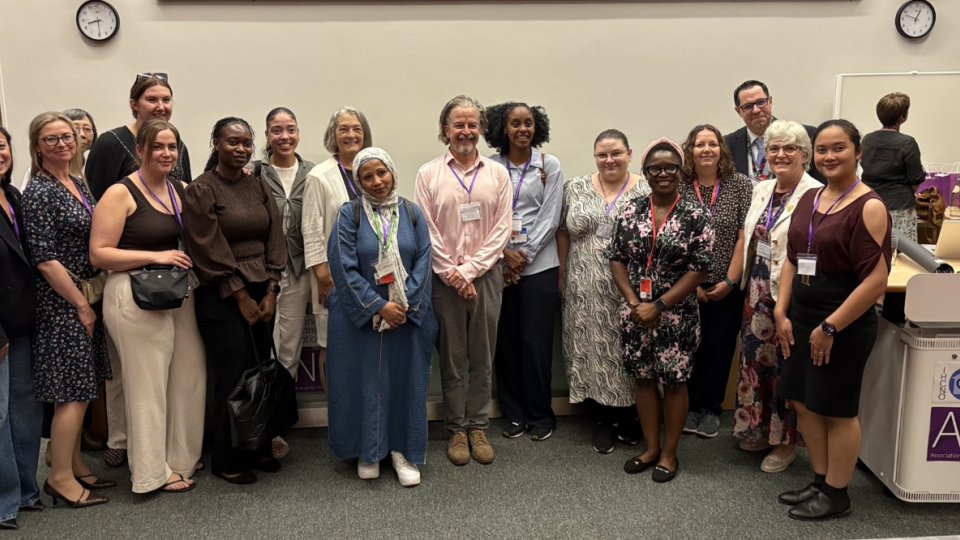
Howard Catton, International Council of Nurses (ICN) CEO, delivered the keynote address at the International Home Care Nurses Organization's (IHCNO) 5th Global Conference, 17–19 June 2026 in London, with the theme Caring Beyond Walls: The Power of Nursing in Homes, Communities, and Primary Care Settings. IHCNO is an ICN affiliate member.
Speaking to a global audience of home care nurses, educators, leaders and researchers, Mr Catton drew on the WHO State of the World's Nursing (SOWN) 2025 report, which ICN co-chaired, along with global workforce data and policy. He delivered a clear and urgent message: the maldistribution of nurses between hospital and community settings must be urgently addressed and we must empower nurses as the backbone of the preventive, person-centred and primary health care our world needs if we are to achieve the global health ambitions of health for all and the SDGs.
Mr Catton told attendees that the global nursing shortage of 5.8 million is compounded by overlooked inequities in distribution. He said:
“The issue is not only how many nurses the world has, but also where they are. We often discuss unequal concentrations of nurses in high-resource vs. low-resource regions and urban vs. rural areas, but there is another major imbalance that deserves our attention. Nursing workforces remain concentrated in hospital settings (in many countries at least 60–65%), with too few in the communities, homes and clinics that are the foundation of primary health care. For example, in England, where we are meeting today, worrying data suggests that just 12% of NHS nurses are in dedicated community services, while important community nursing workforces like district nurses, health visitors, and school nurses are shrinking.
‘These global patterns represent a serious misalignment with the direction set by health policy. SOWN 2025 calls explicitly for systems to be reoriented toward people-centred primary health care, while the WHO Global Strategic Directions for Nursing and Midwifery, which all member states have committed to, and which ICN advocated strongly for, call for us to plan and educate nurses for community and primary care, working to the full extent of their education.”
Mr Catton challenged outdated perceptions of community nursing, contrasting nostalgic stereotypes, such as the image of the district nurse cycling through the English countryside, familiar from television dramas like the BBC's The District Nurse, with the complex, multidimensional realities of the role today. He said:
"Today's community nurses administer chemotherapy and manage complex drug regimes in patients' homes. They are responsible for vascular access lines and devices, oversee specialized wound management and support end of life care in the place that the overwhelming majority of people would want to spend their remaining days. Much of this care would previously have required a hospital admission. In addition, they navigate the intricate clinical and social needs of people living with multiple long-term conditions. And critically, they are the coordinators of care, the professionals who hold the whole picture of a patient's health and connect them across services, and who provide health education and preventive care for entire communities. This is highly skilled, clinically complex nursing and leadership, which should be recognized, valued and resourced."
Mr Catton discussed the vital importance of nursing within primary health care, which is central to achieving global commitments such as the Sustainable Development Goals (SDGs) and Universal Health Coverage (UHC). He highlighted the urgency of enabling nurses in order to transform health systems to meet growing health demands, changing population needs, and complex health and geopolitical environments. He offered a direct challenge to the global health community, saying: "Health for all cannot mean care only for those who can make it to a hospital. Universal health coverage is about reaching every person no matter where they live and nurses as both the largest group of health professions with unrivalled reach deep into our communities are the key to ensuring that no one is left behind.
Mr Catton connected the value of community nursing with ICN’s new framework of nursing powers, set out in ICN's International Nurses Day 2026 report, Empowered Nurses Save Lives. He said:
“This year’s evidence-based International Nurses Day report moves the world’s understanding of nursing from monochrome to multicolour, with our model of seven nursing powers: the power of trust, the professional, numbers, practice, care, proximity and peace. Every single one of these powers is evident in community and home nursing.
‘Nurses are the largest, most trusted segment of the health workforce, with rigorous ethics and education, and the professionals closest to patients and communities, with a clear impact on every health outcome. Nurses have the power to bring solutions to our world’s most pressing health issues: challenges such as aging populations, increased non-communicable diseases, rising conflicts and health and climate crises will not be solved in hospitals alone, but in homes, clinics, and communities.
‘It is time to structurally empower the nursing workforce to enable their full impact, which must include action to correct the persistent imbalance of nurses between hospital and community and PHC settings.”
Mr Catton called for systemic change to build and sustain the community nursing workforce, including embedding meaningful community placements within undergraduate nurse education so that students experience the breadth of community practice from the outset; creating clear career pathways that allow nurses to enter community and home care roles at the beginning of their careers; and ensuring that pay and progression frameworks genuinely reflect the complexity, clinical skill and professional responsibility that community and home care nursing demands.